Microbiology, in the context of medicine, is a vital field focusing on medically relevant microbes and the infections they cause. The Department of Microbiology at the Faculty of Medicine, University of Jaffna, has a prominent history marked by dedication and continuous growth in medical education, research, and diagnostic services. It was initially established as the Division of Microbiology within the Department of Pathology.
The first Lecturer in Microbiology was Dr. Ramanathan Narendranathan, who was soon joined by Dr. (Mrs) Sornambigai Vetpillai. Both of them shouldered the responsibility of teaching and diagnostic services in Medical Microbiology in the 1980s. With the escalation of the civil war in the mid-1980s, along with the other departments, Microbiology also faced the challenges of losing its valued academics. Despite significant challenges in the 1990s, including the prevailing civil war situation and a prolonged shortage of academic staff, Dr K Velayuthapillai, a Visiting Lecturer from Colombo bore the responsibility of teaching and assessment with the support of dedicated Medical Officers from the Teaching Hospital, Jaffna at that time. Following him, Dr. (Mrs) Mangaleswary Jeganathan joined in the late 1990s followed by Dr. Peruvaluthipillai in early 2000. In the period between late 1990s and early 2000, Microbiology division had the privilege of support from Prof. V. Kunanantham under whom students learnt Microbiology both in traditional and innovative ways. Dr. Valarmathy Ambalavanar took over the responsibilities from him in early 2001 and Dr. Kalamathy Murugananthan joined in 2004 followed by Dr. Lakshy Guruparan in mid-2011 who served the department for more than five years and left.
In August 2017, the Division of Microbiology was officially recognized as a separate entity, becoming the Department of Microbiology.
The department was also supported by the Technical Officer Mr. Erampamoorthy in the early days of its establishment followed by Mr. P Thevapatham, another Technical Officer since mid-1980s for more than 30 years. Former supporting staff also include Ms. N. Shayanutha, Technical Officer, Management Assistant Ms Swastika Ravichandran and Mr. N Senthilkumaran.
Microbiology teaching also benefited from renowned Visiting Lecturers including Prof. Vasanthi Thevanesam, Prof. Enoka Corea and Prof. Natkunam Ketheesan,
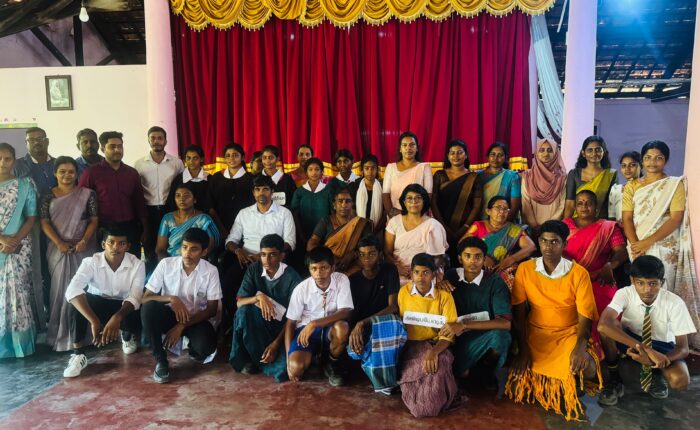
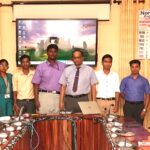
Currently, the work of the Department is shouldered by a committed team of academic and non-academic staff. Dr. Valarmathy Ambalavanar, Senior Lecturer in Microbiology, serves as the Head of the Department. The academic team also includes Prof. Kalamathy Murugananthan, Professor in Microbiology. At present, it is also supported by dedicated Visiting Lecturers Dr. Vaithehi Rajeevan Francis, Consultant Microbiologist and Senior Lecturer in Microbiology, Faculty of Health-Care Sciences, Eastern University, Dr. Rajanthi Ramachandran, Consultant Microbiologist, Teaching hospital, Jaffna and Dr. Gajanthan Raveendran Consultant Physician, Teaching hospital, Jaffna. The non-academic staff who play a crucial role in the smooth functioning of the department include Technical Officers Mr. Murugaiah Ragikaran and Ms. Sutharjini Thuvakaran, and Laboratory Attendants Mr. Sinnathurai Tharmasena, and Mr. Sooriyanesan Sacikaran.
For several decades, the department has been playing a crucial role in teaching Medical Microbiology focusing mainly on Clinical Microbiology. The department offers the medical students a comprehensive undergraduate programme covering various microbiological disciplines, including bacteriology, virology, mycology, immunology and clinical microbiology. It has a structured undergraduate curriculum designed to equip students with relevant knowledge and practical skills in diagnosing infections, optimizing antimicrobial use, and implementing infection prevention and control measures. The close collaboration with the Teaching Hospital, Jaffna, has allowed the department to integrate practical exposure to the knowledge and skills they gain from the department. The training the students receive from the department ensures that future doctors are well-prepared to diagnose, manage and prevent infectious diseases effectively in their clinical practice and this partnership encourages the students to gain hands-on experience in the above and enhance their clinical competencies.
In addition to training its own students, the department has been extending its teaching services to the Allied Health Sciences (AHS) students of Jaffna University, Public Health Inspectors (PHIs), and to other state medical faculties (including postgraduate courses) further broadening its impact on healthcare education.
Beyond its academic responsibilities, the department has been playing a vital role in providing essential diagnostic services to the Teaching Hospital, Jaffna especially until the microbiologist was appointed there.
The department has also been actively involved in research, contributing to the study of infectious diseases, antimicrobial resistance, and epidemiology. It has supervised numerous student research projects for medical and Allied Health Sciences students, further fostering a culture of scientific inquiry and innovation.
Additionally, the department has been actively involved in public health services such as testing water quality, health education programmes, and outreach activities across the Northern Province, contributing significantly to disease prevention and control efforts.
The Department of Microbiology has steadily expanded its academic and research activities over the years. One of the significant challenges faced by the department has been a persistent shortage of academic staff and supporting staff. For extended periods, the department functioned with only a single academic member or, at times, none and without a clerical worker. Despite these limitations, the department continued to train students with the invaluable support of the extended faculty, including specialists from the Teaching Hospital, Jaffna, and experienced microbiologists from other medical faculties in a visiting capacity. Many of these external contributors were alumni of the Faculty of Medicine, University of Jaffna, underscoring the department’s enduring influence on medical education in the region.
To sum up, the Department of Microbiology at the Faculty of Medicine, University of Jaffna, has played a key role in medical education, research, and community health. Despite challenges, it has remained steadfast in its mission to provide quality education and essential diagnostic services. The department’s dedication to academic excellence, research innovation, and public health initiatives continues to shape the future of microbiology in Sri Lanka and beyond.