Project Overview
The Green Nallur Initiative is the local execution arm of the wider Green Jaffna Initiative, implemented within the Nallur Pradeshiya Sabha area in partnership with the IMPACT Association, Green Layer Organization, Faculty of Medicine, University of Jaffna and community stakeholders.
The initiative is structured around four operational greening plans:
- Roadside Greening (Road Beautification)
- Institutional Greening (Schools, Banks, Temples, Churches, Community Centres and the University of Jaffna)
- Pond Restoration
- Urban Mini Forest Creation
One-year pilot commitments:
- Plant 1,000 native trees
- Establish one Urban Mini Forest
- Achieve ≥80% tree survival
- Green schools, religious and government institutions
- Introduce composting programmes across pilot sites.
Rationale
The Jaffna Peninsula faces rising temperatures, prolonged drought, groundwater salinity, loss of tree cover and increasing urban heat. Tree restoration is considered a climate adaptation strategy that improves biodiversity, groundwater recharge, air quality and public health. Nallur was selected as a scalable pilot model for wider implementation across Jaffna.
El Niño Considerations
El Niño has resulted in higher temperatures, reduced rainfall and lower soil moisture, affecting sapling survival. Procurement of additional saplings was therefore postponed to coincide with improved rainfall and maximize survival.
Project Objectives
- Increase localized green cover through roadside and institutional planting.
- Establish one Urban Mini Forest.
- Promote environmental stewardship in schools, banks, temples, churches, community centres and the University.
- Restore Paraivaikulam and other ponds.
- Improve waste management through composting.
- Achieve at least 80% tree survival using scientific planting and monitoring.
Key Activities
Road Beautification
- Tree planting at Aadiyapaadam Road (2 May 2026)
- Tree planting at Potpathy Road (15 May 2026)
Institutional Beautification
- Tree nursery handed over to Faculty of Medicine students.
- Native tree planting at Faculty of Medicine.
- Tree planting at Thalakavil Pillaiyaar Temple.
Small Forest Creation
- Development of one Urban Mini Forest.
Pond Restoration
- Planned restoration of Paraivaikulam to improve groundwater recharge.
Implementation Roadmap
Step 1 – Mobilization
Step 2 – Site Finalization
Step 3 – Plants and Resource Supply
Step 4 – Civic Stewardship linking households, schools and temples with planted trees.
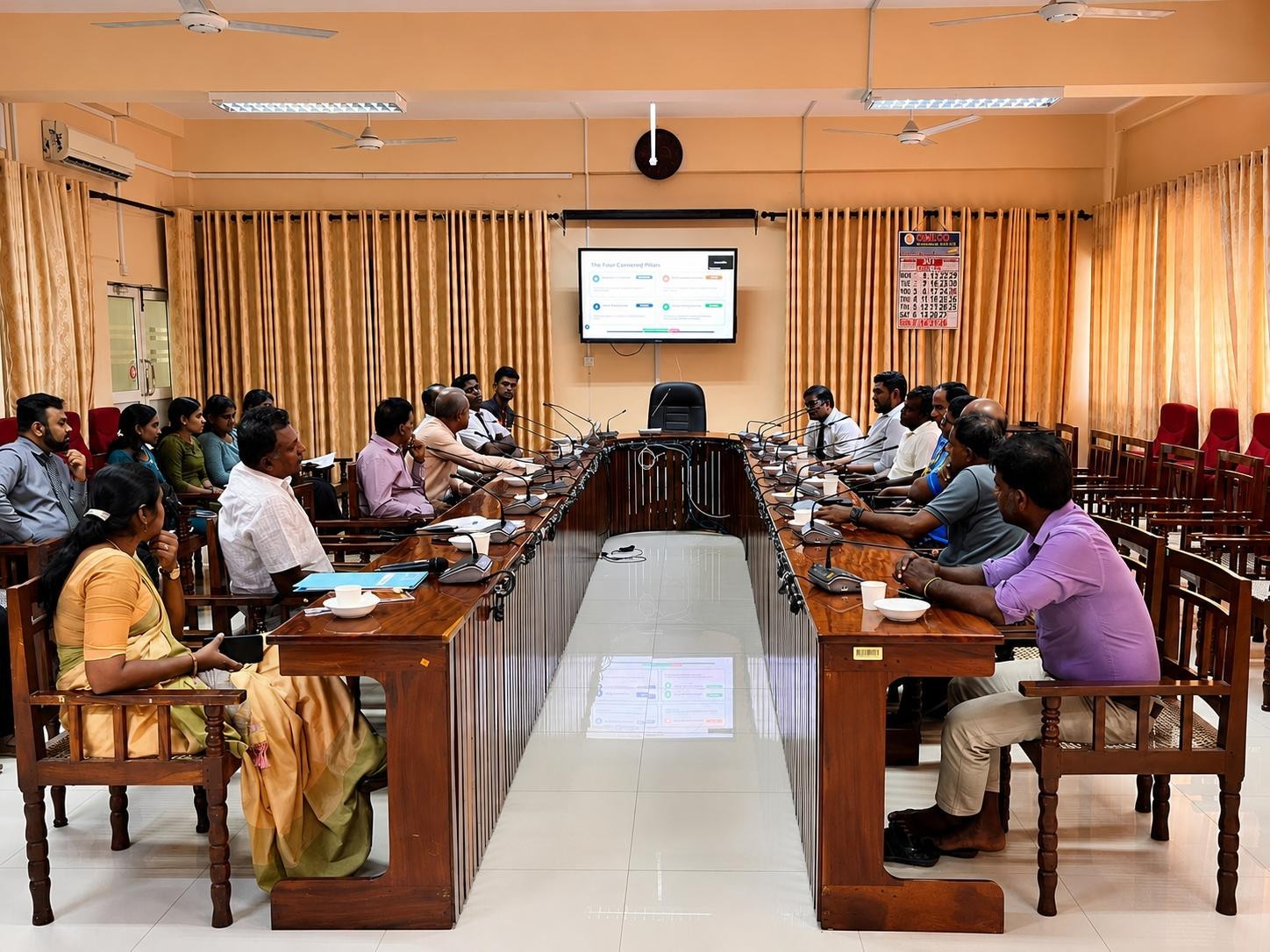
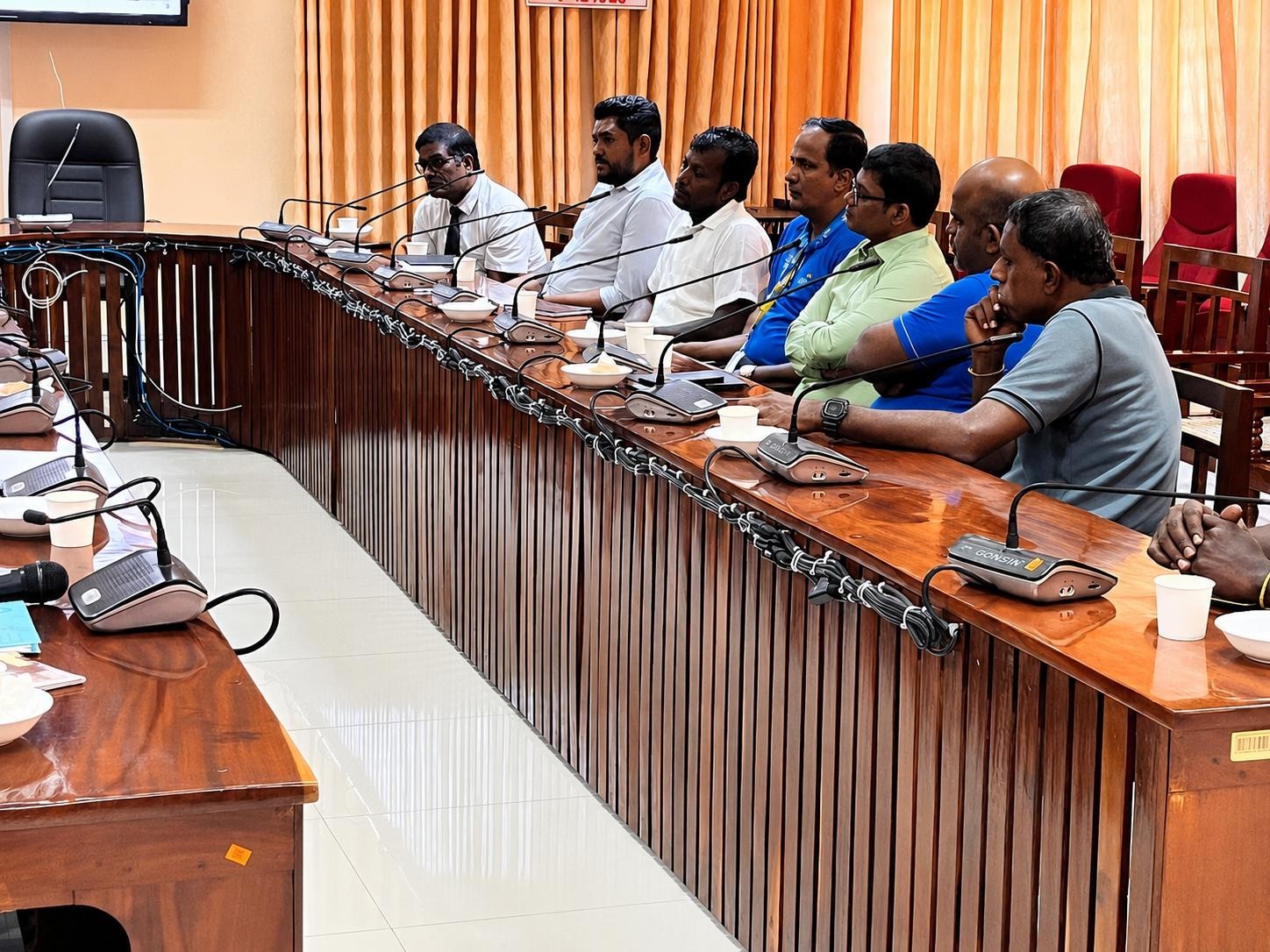
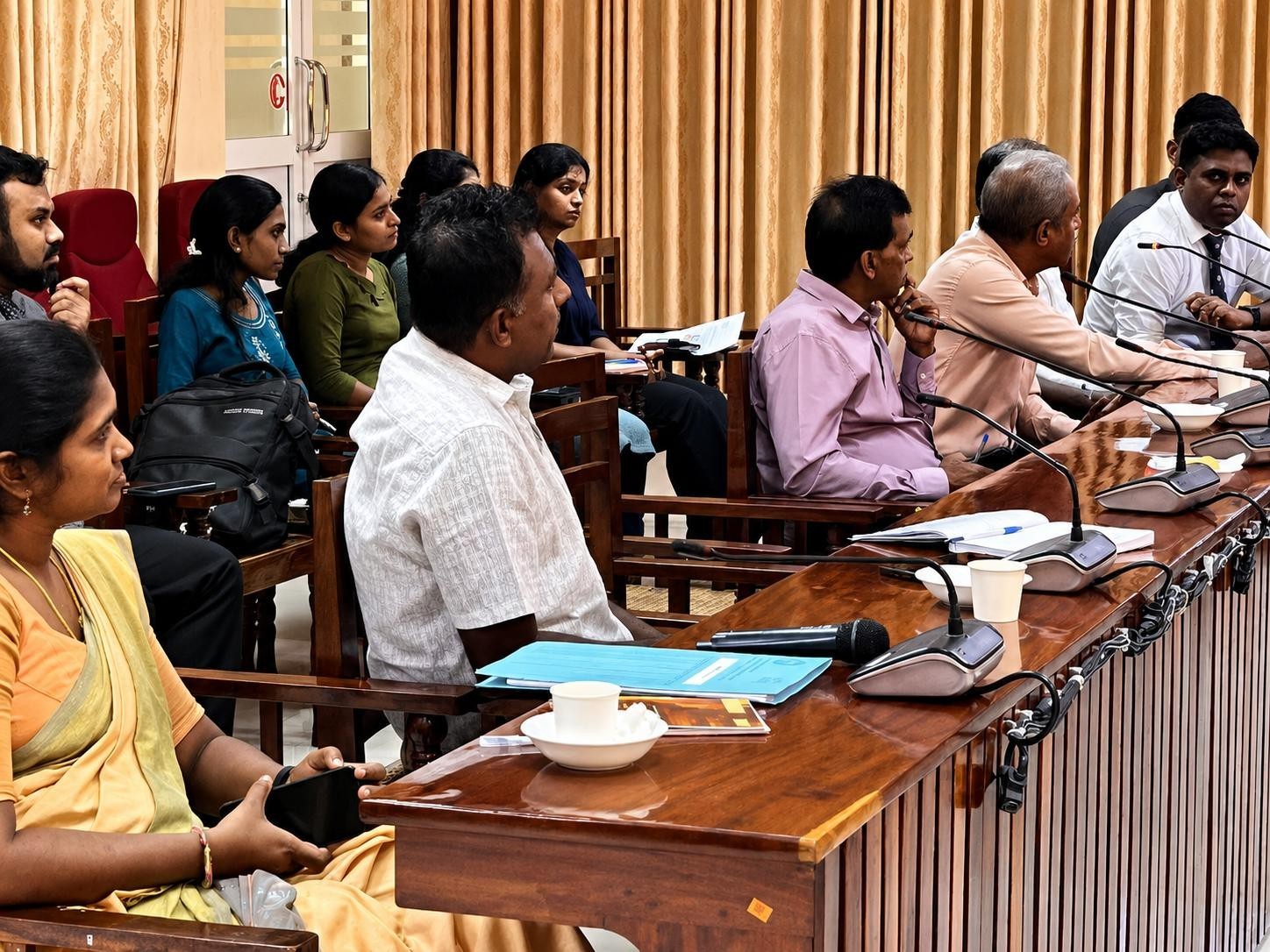
Stakeholder Brainstorming Meeting (17 July 2026)
A cross-sector stakeholder brainstorming meeting was convened on 17 July 2026, bringing together representatives from the Nallur Pradeshiya Sabha, Faculty of Medicine, University of Jaffna, Medical Officer of Health (MOH), banking sector, government agencies, and community organizations to strengthen collaboration and guide the implementation of the Green Nallur Initiative.
The meeting generated several key recommendations:
- S. Kumaran emphasized the importance of recognizing the effort involved in tree planting and long-term maintenance. He encouraged senior officials to actively participate in planting activities alongside field staff, fostering leadership through example.
- B. Balagobi informed the meeting that the Forest Department could provide approximately 2,000 native saplings, while Pandian Farm had agreed to offer mature trees at a 50% concessionary rate. He also emphasized the need for scientific planting techniques and systematic monitoring to achieve the target tree survival rate.
- The Chairman of Nallur Pradeshiya Sabha highlighted the importance of community ownership of the initiative. He requested the provision of a land drilling machine to facilitate tree planting, expressed concerns regarding tree removal during electricity maintenance work, and proposed the restoration and development of Paraivaikulam Pond.
- P. Sasikumar recommended postponing large-scale planting activities by approximately two months due to the prevailing El Niño conditions. He further proposed establishing institutional tree nurseries, drawing on the successful model implemented by the Commercial Bank.
- Dr.S. Premakrishna recommended expanding stakeholder engagement by involving schools, temples, community centres, and local residents in tree planting activities. He also proposed providing training for Electricity Board tree-cutting crews to minimize unnecessary damage to trees during maintenance work.
- The Medical Officer of Health (MOH) proposed mobilizing Public Health Inspectors (PHIs), Public Health Midwives (PHMs), Mother Support Groups, Village Committees, and Grama Niladhari Officers to support community mobilization. He also recommended extending greening activities to MOH offices and community centres.
- The Public Health Inspector (PHI) encouraged the promotion of fruit tree planting around households, particularly to increase participation among children and families. He also highlighted an initiative that distributed 1,000 coconut seedlings to Kokuvil Hindu Primary School in celebration of its 50th anniversary.
- A teacher from Kokuvil Hindu College proposed involving Grade 6 students in home-based tree planting programmes supported by photographic documentation, competitions, and the integration of practical tree care into the school curriculum.
- Representatives from Hatton National Bank (HNB) expressed their commitment to supporting the initiative through Corporate Social Responsibility (CSR) by providing a land drilling machine, establishing a tree nursery, and undertaking greening activities around their new branch premises. Representatives from National Development Bank (NDB), together with members of the Nallur Pradeshiya Sabha, proposed conducting climate awareness campaigns linked to temple festivals and children’s birthday celebrations to encourage wider community participation.
Key Stakeholders
Faculty of Medicine, University of Jaffna
Nallur Pradeshiya Sabha
IMPACT Association
Green Layer Organization
Medical Officer of Health
Public Health Inspectors
Community Organizations
Conclusion
The Green Nallur Initiative provides a practical, collaborative and scalable model for climate resilience through road beautification, institutional greening, urban mini forests and pond restoration.